
High-fibre bread, porridge, brown rice, and wholegrain pasta — practical staples found in New Zealand kitchens.
General food information only — not medical advice. Figures are approximate.
Compare Grain OptionsWholemeal and mixed-grain breads in New Zealand typically contain 70–95 kcal per slice with 2–4 g dietary fibre. Look for at least 4 g fibre per 100 g on the nutrition panel — this signals genuine wholegrain content rather than caramel-coloured white flour. Toast with avocado and a poached egg lands near 300 kcal with balanced fat, protein, and complex carbohydrate.
Rolled oats remain one of the most economical whole grains available. A 40 g dry serve cooked in water delivers about 150 kcal, 4 g fibre, 5 g protein, and meaningful manganese (around 1.5 mg — roughly 65% of adult adequate intake). Adding frozen berries and a spoon of yoghurt increases calcium and vitamin C without excessive sugar. Overnight oats prepared in jars suit commuters leaving early from Christchurch or Wellington suburbs — soak with trim milk, chia seeds, and grated apple for texture.
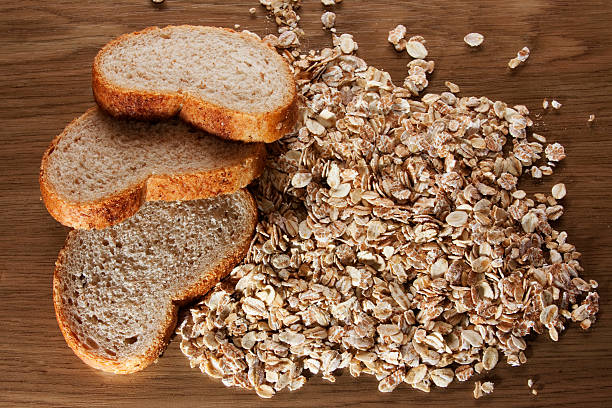 Wholemeal bread and oats — fibre-rich breakfast staples
Cooked brown rice (~1 cup, 195 g) provides approximately 215 kcal, 3.5 g fibre, 5 g protein, and 84 mg magnesium. Long-grain varieties stay separate and work well in fried rice with vegetables. Batch-cook on Sunday and refrigerate portions — cooled and reheated rice can develop more resistant starch, a topic covered in general food-science writing.
White rice, by comparison, offers similar calories with under 1 g fibre per cup. If your household prefers white jasmine rice culturally or for taste, mix in 30–40% brown rice gradually. The texture shift becomes familiar over a few weeks without abandoning favourite recipes.
Standard white pasta (dry 75 g) cooks to about 260 kcal with 2 g fibre. Whole wheat or legume-blend pasta at the same dry weight can reach 6–8 g fibre and 12–14 g protein. Check labels — "high fibre" claims in NZ require specific thresholds under Food Standards Australia New Zealand rules.
Pair pasta with tomato-based sauces loaded with grated carrot and zucchini. A plate with 75 g dry wholegrain pasta, vegetable sauce, and a sprinkle of parmesan sits near 450–500 kcal with a respectable micronutrient profile including lycopene, vitamin A precursors, and calcium from cheese.
Some long-term population research has examined patterns of wholegrain intake alongside general dietary patterns. That background is shared here for educational context only — it is not medical guidance and does not predict individual outcomes. A practical aim for many households is steady inclusion: three to six serves daily depending on age, sex, and activity. A serve might be one slice of bread, half a cup of cooked rice, or a third of a cup of dry oats.
| Meal | Food | Approx. calories | Fibre |
|---|---|---|---|
| Breakfast | 1 cup cooked oats + berries | ~220 kcal | 5 g |
| Lunch | 2 slices wholemeal bread + salad | ~320 kcal | 7 g |
| Snack | Wholegrain cracker + hummus | ~150 kcal | 3 g |
| Dinner | 1 cup brown rice + stir-fry veg + tofu | ~480 kcal | 8 g |
This pattern delivers roughly 23 g fibre — close to the 25–30 g daily target many nutrition references suggest for adults.
Community events across New Zealand where you can learn about whole grains, baking, and sustainable food.
Riccarton House & Bush. Local millers showcase stoneground flour and sourdough techniques. Free sampling of wholegrain bread from 9 am.
Harbour Market pop-up. Chefs compete with oat-based bowls featuring NZ berries and nuts. Nutrition info boards at each stall.
Community centre session on reading labels and cooking brown rice and quinoa. Registration via local council wellbeing programme.
Celebrating seasonal grains and root vegetables. Cooking demos focus on high-fibre salads and pilafs using South Island produce.